
Cat, Dog, Horse, Omega fatty acids
Where do dogs, cats and horses get the omega-3 fatty acids EPA and DHA they need?
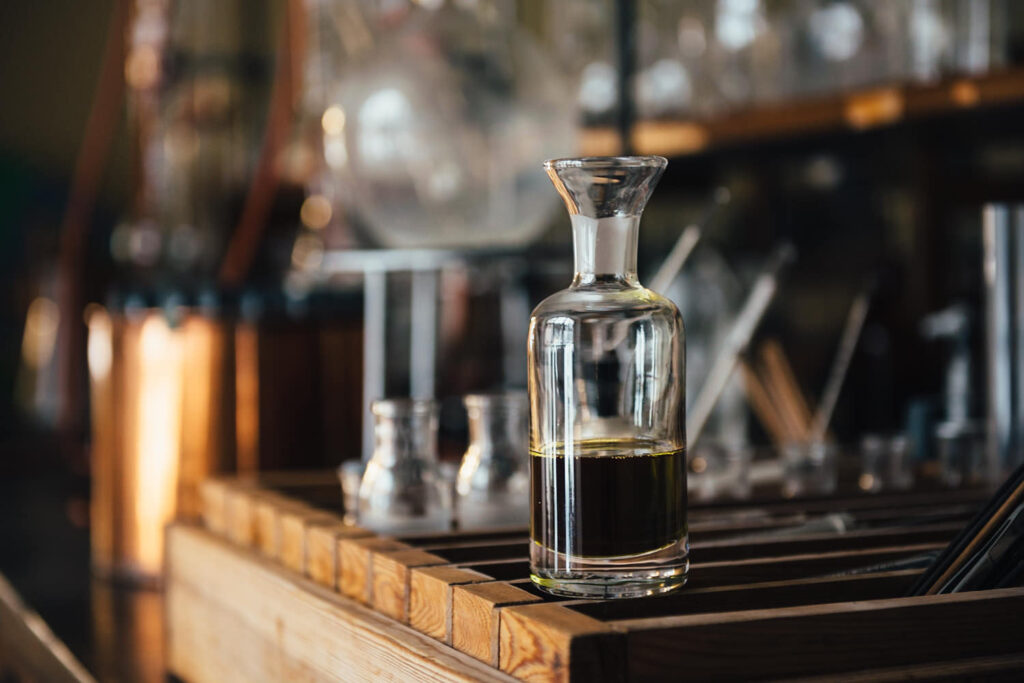
Fish oil, salmon oil, krill oil or microalgae oil? All of these contain omega-3 fatty acids that are important for animal wellbeing. However, they differ in their origins, production methods and environmental impact. Microalgae oil, in particular, has emerged as an interesting alternative to traditional fish oils.
EPA and DHA support animal health
EPA (eicosapentaenoic acid) and DHA (docosahexaenoic acid) are omega-3 fatty acids found in marine sources. They play many important roles in the bodies of dogs, cats and horses.
EPA and DHA help regulate the body’s inflammatory responses (Calder, 2017; Serhan & Levy, 2018). Their effects have been studied particularly in relation to joint health (Söderlund & Heikkilä, 2019) and heart health. DHA is also an important building block of cell membranes and is essential for the normal development and function of the brain, nervous system, and vision (Greiner et al., 2001; Zicker et al., 2012).
Dogs and horses are slightly better than cats at converting the plant-based omega-3 fatty acid alpha-linolenic acid (ALA) into EPA and DHA. In practice, however, this conversion is so limited in all three species that it is worth providing these fatty acids fresh through a high-quality supplement.
EPA and DHA help dogs and cats with osteoarthritis
When a dog or cat has osteoarthritis, vets will often recommend marine omega-3 fatty acids and joint supplements. Glucosamine and chondroitin sulphate are among the most extensively studied joint supplements. These recommendations are based on research-informed guidance published by the World Small Animal Veterinary Association (WSAVA) (Monteiro et al., 2023)..

Where do EPA and DHA come from?
EPA and DHA are found primarily in marine ingredients. The best-known sources include fish oil, salmon oil, and krill oil. More recently, microalgae oil has emerged as an alternative that allows marine omega-3 fatty acids to be produced without fishing.
Interestingly, much of the EPA and DHA found in marine food chains originally come from microalgae. Fish obtain these fatty acids through their diet, either directly or further along the food chain.
Fish oil: a traditional source of omega-3 fatty acids
Fish oil, excluding salmon oil, is produced from various oily fish, such as anchovies, sardines and mackerel. It can be made from wild-caught fish or by-products from the fishing industry.
Fish oil naturally contains EPA and DHA, although their concentrations vary depending on the fish species, raw materials, and production methods.
One of the strengths of fish oil is its long history of use and the wealth of research supporting it. However, its production also raises environmental concerns, which we at Nutrolin® take seriously. The sustainability of fish oil made from wild-caught fish depends particularly on where the fish are caught and how fisheries are managed.
Salmon oil is not what it used to be
Salmon oil has long been a popular fatty acid supplement, particularly for dogs and cats. Unfortunately, its omega-3 content has declined dramatically since the beginning of the 2000s.
This change is largely due to the increasing use of rapeseed oil instead of fish oil as an energy source in farmed salmon feed. As a result, salmon oil is no longer such a sensible choice.
To provide sufficient EPA and DHA, the amount of salmon oil needed can be more than four times that of fish oil. Instead of salmon oil, it makes more sense to choose a high-quality fish oil or microalgae oil with a high concentration of EPA and DHA.
Microalgae oil provides omega-3 fatty acids straight from their original source
Microalgae oil is an interesting alternative to traditional fish oils. Rather than obtaining EPA and DHA from fish, these fatty acids can be sourced directly from the microorganisms that produce them.
Microalgae can be cultivated under controlled conditions, for example in enclosed fermentation tanks. Once cultivated, the oil is extracted, purified, and processed for its intended use.
The EPA and DHA concentrations in microalgae oil depend on the microalgae species and production method used.

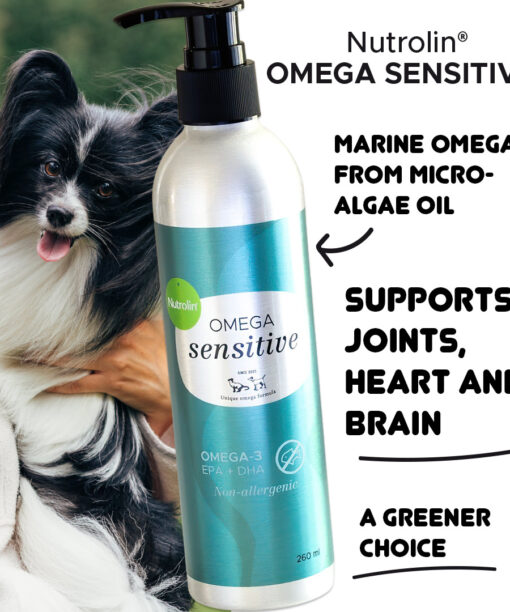
Microalgae oil provides a useful alternative to fish oil
Studies show that microalgae oil is a useful source of EPA and DHA for dogs, cats and horses (Dahms et al., 2019; Vainio et al., 2026; Vuorinen et al., 2020; Zhang et al., 2025).
Adding microalgae oil to the diet has been shown to increase blood concentrations of these fatty acids. In a study involving cats, DHA from microalgae oil increased blood DHA concentrations to a similar extent as DHA from fish oil (Motsinger et al., 2025).
Nutrolin® products contain fish oil, krill oil and microalgae oil
Responsibly sourced fish oil
The sustainability of fish oil depends on where the fish are caught and how fishing is regulated. For example, the international Friend of the Sea certification requires fisheries to take fish stock health, the prevention of overfishing, and the impact of fishing on marine ecosystems into account.
The fish oil used in Nutrolin® products is Friend of the Sea certified.
As the omega-3 content of individual fish species varies with the seasons and growing conditions, using several fish species in production is important. This helps ensure that EPA and DHA concentrations remain consistent from one production batch to the next.
The fish used to produce our fish oil belong mainly to the Engraulidae family (including Peruvian anchoveta), but also include species from the Carangidae, Clupeidae, Osmeridae, Scombridae and Ammodytidae families.
Our fish oil is initially produced in South America and then refined at Lýsi’s facilities in Iceland, where it is processed to a standard suitable for use in pharmaceuticals, food or animal feed.
Nutrolin® products use only pharmaceutical-grade fish oil. Lýsi’s production process is GMP and ISO certified, and production is supervised by the Icelandic Medicines Agency. The resulting fish oil is several times purer than required by the EU limits for contaminants in food-grade fish oil.
More sustainable microalgae oil
Microalgae oil has one major advantage over fish oil: its production does not require wild fish to be caught. Instead, fatty acids are obtained directly from the microorganisms that produce them.
Microalgae are cultivated under controlled conditions, such as in enclosed production tanks.
EPA and DHA concentrations vary depending on the microalgae species and production method. Some microalgae oils contain mainly DHA, while others provide significant amounts of both fatty acids.
Research suggests that EPA and DHA from microalgae oil can be absorbed and utilised by the body in much the same way as those from fish oil (Bailey et al., 2025). For example, a study in cats found that DHA from microalgae oil increased blood DHA concentrations to a similar extent as DHA from fish oil (Motsinger et al., 2025).
This makes microalgae oil an interesting alternative source of omega-3 fatty acids for dogs, cats, and horses.
Of course, microalgae oil production also comes with environmental considerations. Energy consumption, the nutrients used in cultivation, and the efficiency of the production process all affect its sustainability. However, well-designed microalgae oil production offers an opportunity to reduce our reliance on wild marine animals for omega-3 fatty acids.

Omega-3 fatty acids may support respiratory health in horses
A University of Helsinki study investigated the effects of EPA- and DHA-rich microalgae oil on horses’ airways.
After a seven-and-a-half-week feeding period, horses receiving microalgae oil showed a reduction in the proportion of neutrophils, a type of white blood cell associated with airway inflammation.
The findings provide promising indications that omega-3 fatty acids may play a role in supporting respiratory health in horses.
(Vainio et al., 2026)
Krill oil: omega-3 fatty acids from tiny crustaceans
Krill oil is produced from tiny marine crustaceans known as krill. It contains EPA and DHA, some of which are bound to phospholipids. This makes it different from many fish oils, where fatty acids are primarily found in the form of triglycerides.
One reason krill oil is popular is that some of its EPA and DHA are bound to phospholipids. This has been suggested to improve the absorption and utilisation of these fatty acids in the body.
Krill oil also naturally contains astaxanthin, which is regarded as one of nature’s most powerful antioxidants.
For example, Nutrolin® SPORT contains krill oil. The astaxanthin naturally present in krill oil helps protect cells against oxidative stress and complements the effects of the marine omega-3 fatty acids EPA and DHA.
Krill oil production also raises ecological concerns, as krill are a vital food source for many marine animals. Fish, penguins, seals and whales all depend on them. Krill fishing can therefore have a significant impact on marine food webs.
The krill oil and krill meal used in Nutrolin® products are sourced from the Norwegian company Aker BioMarine. We use their food-grade Superba krill oil.
Krill are harvested in the Southern Ocean, in Antarctic waters. Fishing takes place within designated, closely monitored areas.
In addition to strict regulations governing krill fishing, Aker BioMarine participates in sustainability programmes including MSC (Marine Stewardship Council) certification and initiatives associated with SFP (Sustainable Fisheries Partnership). Independent observers are also present on board its vessels during the fishing season.
As global demand for omega-3 fatty acids continues to grow, it is increasingly important to consider how responsibly they are produced. This is something we at Nutrolin® take particularly seriously.

Is microalgae oil the best choice for everyone?
Microalgae oil is a suitable source of marine omega-3 fatty acids for dogs, cats, and horses. Its key advantage is that EPA and DHA can be produced without fishing.
However, the origin of an oil is not the only factor determining its nutritional value. What matters most is how much EPA and DHA a product contains and whether those amounts meet the animal’s needs.
Not all microalgae oils have the same fatty acid composition. If the aim is to replace the EPA and DHA provided by pharmaceutical-grade fish oil, it is important to choose a microalgae oil that contains sufficient amounts of both fatty acids.
The animal’s individual needs, diet, and the palatability of the supplement also play a part in choosing the right product.
DHA is important for growing animals
DHA is an essential building block of the nervous system and retina (Greiner et al., 2001; Zicker et al., 2012).
Foals, puppies and kittens can benefit significantly from marine omega-3 fatty acids added to their diet, as their ability to convert plant-based omega-3s into EPA and DHA is very limited.




Fatty acid quality and shelf-life matter just as much as their source
Because of their chemical structure, EPA and DHA are particularly vulnerable to oxidation, which causes oils to turn rancid. When oil is exposed to oxygen, heat, or light, its fatty acids gradually begin to oxidise, reducing its nutritional value. Oxidised oil may also place an additional burden on the body.
At Nutrolin®, we pay particular attention to the purity of our raw materials, fatty acid content and protection against oxidation throughout production.
The quality and stability of Nutrolin® oils are monitored throughout the production chain. Thanks to years of dedicated product development, Nutrolin® oils are better able to withstand oxidative conditions than conventional salmon oils, fish oils and concentrated fish oils (Thomsen et al., 2017). This helps ensure that animals receive fatty acids of the highest possible quality.
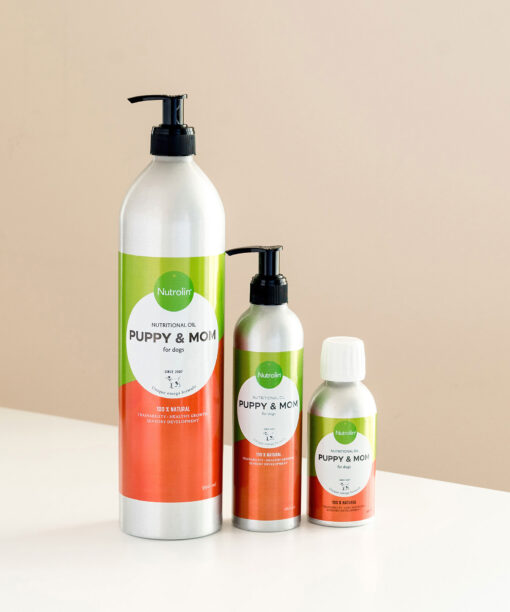
Packaging and correct storage are also essential. Nutrolin® products for dogs and cats are packaged in aluminium bottles and tubes, while our equine products come in aluminium-coated bags. Aluminium provides particularly effective protection against oxidation.
Conventional plastic or paper food bags and packaging cannot offer the same level of protection. This is why animals fed commercial pet food can benefit from a supplementary fatty acid product that keeps these important omegas fresh.
Always store fatty acid supplements according to the manufacturer’s instructions and use them within the recommended period after opening.

References
Bailey, E., Wojcik, J., Rahn, M., Roos, F., Spooren, A., & Koshibu, K. (2025). Comparative Bioavailability of DHA and EPA from Microalgal and Fish Oil in Adults. International Journal of Molecular Sciences, 26(19), 9343.
Calder, P.C. (2017). Omega-3 fatty acids and inflammatory processes: from molecules to man. Biochem. Soc. Trans. 45(5):1105-1115
Dahms, I., Bailey-Hall, E., Sylvester, E., Parenteau, A., Yu, S., Karagiannis, A., Roos, F., & Wilson, J. (2019). Safety of a novel feed ingredient, Algal Oil containing EPA and DHA, in a gestation-lactation-growth feeding study in Beagle dogs. PLOS ONE, 14(6), e0217794.
Greiner, R. S., Moriguchi, T., Slotnick, B. M., Hutton, A., & Salem, N. (2001). Olfactory discrimination deficits in n-3 fatty acid-deficient rats. Physiology & Behavior, 72(3), 379–385.
Monteiro, B. P., et al. (2023). 2022 WSAVA guidelines for the recognition, assessment and treatment of pain. Journal of Small Animal Practice, 64(4), 175–310.
Motsinger, L.A., Kalmbach, C.R., Brejda, J., Mwakatage, N., Hancock, L., & Fritsch, D.A. (2025). Effects of algal oil as an alternative to fish oil in feline foods on serum concentrations of eicosapentaenoic acid and docosahexaenoic acid. Journal of Animal Science, 103, skaf252.
Serhan, C.N., & Levy, B.D. (2018). Resolvins in inflammation: emergence of the pro-resolving superfamily of mediators. J. Clin. Invest. 128(7): 2657–2669.
Thomsen, B. R., Griinari, M. & Jacobsen, C. (2017). Improving oxidative stability of liquid fish oil supplements for pets. European Journal of Lipid Science and Technology, 119(6), 1600492.
Vainio, K., House, A. H., Höglund, N. M., Ruhanen, H., Kurkela, K. M. M., Leino, A. E., Käkelä, R., & Mykkänen, A. (2026). Airway lipid mediators in horses: Baseline bronchoalveolar lavage fluid profiles and effects of EPA and DHA-rich microalgae oil supplementation. The Veterinary Journal, 320, 106862.
Vuorinen, A., Bailey-Hall, E., Karagiannis, A., Yu, S., Roos, F., Sylvester, E., Wilson, J., & Dahms, I. (2020). Safety of Algal Oil Containing EPA and DHA in cats during gestation, lactation and growth. Journal of Animal Physiology and Animal Nutrition, 104(5), 1509–1523.
Zhang, Z.-X., Lin, Y.-C., Lian, M., Li, Y.-F., Chen, J.-F., Ma, X.-L., Guo, D.-S., Yang, G., & Sun, X.-M. (2025). Evaluation of the efficacy and safety of omega-3 fatty acid nutritional supplements from Schizochytrium sp. in dog food. Algal Research, 89, 104072.
Zicker, S. C., Jewell, D. E., Yamka, R. M., & Milgram, N. W. (2012). Evaluation of cognitive learning, memory, psychomotor, immunologic, and retinal functions in healthy puppies fed foods fortified with docosahexaenoic acid-rich fish oil from 8 to 52 weeks of age. Journal of the American Veterinary Medical Association, 241(5), 583–594.