
Dog, Nutrolin® OMEGA SENSITIVE®, Nutrolin® SKIN & COAT
Wellbeing from the inside out: Nutrolin® OMEGA SENSITIVE® and Nutrolin® SKIN & COAT make the perfect pair

Many dog owners wonder which fatty acid supplement is the best choice for supporting their dog’s wellbeing. Because different fatty acids, or omegas, play different roles in the body, a single product does not always meet all of a dog’s needs. Nutrolin® OMEGA SENSITIVE® and Nutrolin® SKIN & COAT complement each other perfectly, providing broad support for your dog’s health and wellbeing.
Why do dogs need different fatty acids?
Fatty acids are essential for both humans and animals. Different omega fatty acids have different functions in the body, which is why a single supplement rarely covers all of a dog’s needs.
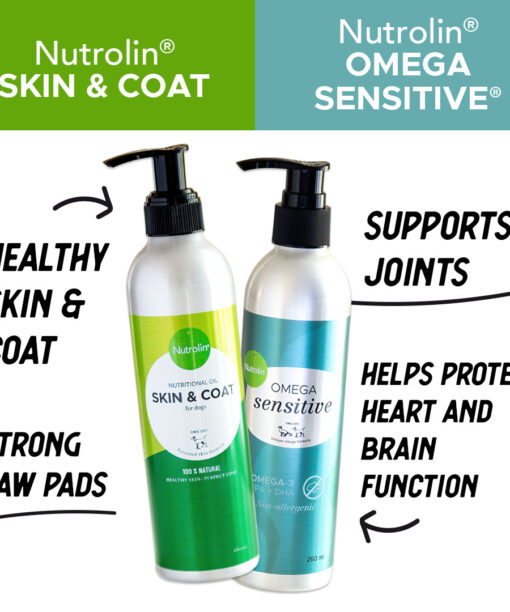
Nutrolin® OMEGA SENSITIVE® provides the marine omega-3 fatty acids EPA and DHA, while Nutrolin® SKIN & COAT is an excellent source of plant-based omega-3 and omega-6 fatty acids, including ALA, SDA, LA and GLA.
Marine omegas support internal wellbeing, including joint, heart and brain function. Fatty acids derived from plant oils help maintain healthy skin, coat, paw pads and nails.
The most important fatty acids in plant and marine oils
Fatty acids are often divided into omega-3, omega-6 and omega-9 categories. Of these, the plant-derived omega-3 and omega-6 fatty acids ALA and LA are considered essential.
Marine omega-3 fatty acids are not the same as the omega-3 and omega-6 fatty acids found in plant oils. They do not replace one another and each serves a different purpose in the body.
Key fatty acids found in plant oils:
- Linoleic acid (LA, omega-6)
- Alpha-linolenic acid (ALA, omega-3)
- Gamma-linolenic acid (GLA, omega-6)
- Stearidonic acid (SDA, omega-3)
Key fatty acids found in marine oils:
- Eicosapentaenoic acid (EPA, omega-3)
- Docosahexaenoic acid (DHA, omega-3)
If your dog suffers from dry or itchy skin, excessive shedding, dandruff, yeast issues or other skin conditions such as atopy, Nutrolin® SKIN & COAT is an excellent companion to Nutrolin® OMEGA SENSITIVE®. It strengthens the skin’s natural protective barrier from within and also acts as an “internal paw balm”. Healthy paw pads should be resilient and flexible.
Nutrolin® OMEGA SENSITIVE® and Nutrolin® SKIN & COAT are designed to meet different needs.
Nutrolin® OMEGA SENSITIVE® provides marine omega-3 fatty acids EPA and DHA. These important fatty acids help support heart, brain and joint health.
Marine omegas are best offered proactively, which is why we recommend this product for all dogs as part of their everyday wellbeing routine.
Nutrolin® SKIN & COAT contains a patented blend of plant oils that provides the skin, coat and paw pads with a unique combination of essential fatty acids. It is particularly rich in linoleic acid, an essential omega-6 fatty acid that is vital for healthy skin and coat.
In addition, Nutrolin® SKIN & COAT contains omega-3 and omega-6 fatty acids that enhance linoleic acid metabolism, including ALA, SDA and GLA.
It is worth remembering that only plant-derived fatty acids directly support the health of the skin, coat and paw pads.
Plant-based fatty acids can be added to your dog’s diet both proactively and whenever additional support is needed. Many of our customers report visible improvements within 2 to 6 weeks of starting the product.
For optimal use, omega fatty acids from different sources should be served at different times of the day.
When used according to the feeding guidelines, your pet receives different fatty acids from different sources.
Marine omega-3 fatty acids EPA and DHA are not the same as the plant-derived omega-3 fatty acids ALA and SDA or the omega-6 fatty acids LA and GLA. They do not replace one another.
Both types of fatty acids are important because the body cannot produce sufficient amounts of them, or cannot produce them at all.
The body can only synthesize small amounts of EPA and DHA, which is why dietary intake through fish oil or microalgae oil is important.
The plant-derived fatty acids that support skin, coat and paw pad health are essential fatty acids that dogs cannot produce themselves.
If your dog is receiving several other supplements at the same time, or has a specific medical condition, consult your veterinarian regarding appropriate dosing.
The importance of EPA and DHA from marine sources such as fish and microalgae has been extensively studied. These fatty acids are known to help regulate inflammatory processes in the body (e.g. Calder, 2017; Serhan & Levy, 2018).
DHA also supports brain and sensory development as well as reproductive health (Greiner et al., 2001; Kelley, 2000; Zicker et al., 2012).
Many veterinarians recommend EPA and DHA supplementation when supporting joint, heart and cognitive function.
Because, contrary to popular belief, marine omegas from fish or microalgae do not directly repair the skin.
When marine omega fatty acids are used to address skin issues, their primary role is to help moderate symptoms such as inflammation (e.g. Calder, 2017; Serhan & Levy, 2018).
Plant-derived fatty acids, on the other hand, help strengthen the skin’s natural protective barrier (e.g. Zheng et al., 2011). This is particularly important because a strong skin barrier provides effective protection against external irritants. Many skin problems are linked to weaknesses in this protective barrier.
Among plant oil fatty acids, linoleic acid is the most important. This essential omega-6 fatty acid plays a key role in maintaining the skin’s moisture balance.
Nutrolin® SKIN & COAT is a carefully formulated blend of plant oils that delivers essential fatty acids for healthy skin, coat and paw pads, together with fatty acids that support their metabolism in precisely the right proportions.
Usually not.
Fatty acids are not a quick fix. They function as building blocks within the body’s structures and support normal metabolic processes. Their effects develop gradually over time.
For example, healthy skin, coat and paw pads depend on the formation of new tissue. Visible improvements therefore usually require consistent use over a sufficiently long period.
As with all aspects of nutrition, consistency is key when using fatty acid supplements.
Testimonial
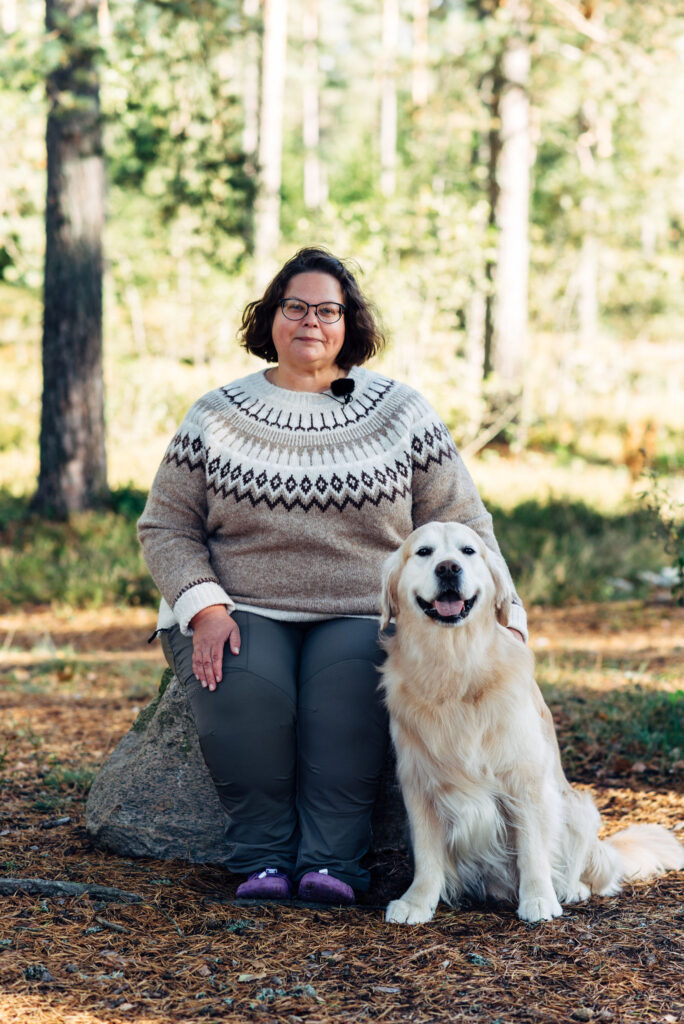
Supporting Tarmo’s wellbeing inside and out
Anna-Mari has three wonderful Golden Retrievers who know Nutrolin® products well.
Eight-year-old Tarmo, whose name means “energy” and “vigour” in Finnish, enjoys a busy life, from retriever sports to dog shows.
To support his active lifestyle, Anna-Mari has chosen Nutrolin® SKIN & COAT and OMEGA SENSITIVE® oils.
“To help maintain his coat for shows, we use Nutrolin® SKIN & COAT. It keeps Tarmo’s coat in excellent condition.
In addition, we have added Nutrolin® OMEGA SENSITIVE® to his daily routine, as it supports overall wellbeing from the inside out. Especially for an aging dog, I find it beneficial for supporting joint health and mobility.”
Prevention supports everyday wellbeing
Not all wellbeing needs are visible on the outside.
The best time to start fatty acid supplementation is when your dog’s skin looks healthy, the coat is shiny and movement is effortless. Dogs benefit from fatty acids even when there are no obvious signs of concern.
Fatty acid supplementation should be viewed as part of a daily nutrition routine. The best results are often achieved when omega supplementation is:
- Consistent and long-term
- Provided at a dosage appropriate for the dog’s size
Special considerations for sensitive skin and fish allergies
Dogs with fish allergies
Fish is not suitable for every dog. However, the microalgae oil in Nutrolin® OMEGA SENSITIVE® and the plant oil blend in Nutrolin® SKIN & COAT are safe choices for dogs with fish allergies and for their owners.
Dogs prone to skin problems
Nutrolin® SKIN & COAT is an excellent addition to the bowl when a dog is prone to skin issues.
Seasonal itching, excessive shedding or dandruff can all be signs that additional fatty acid support is needed. We also recommend Nutrolin® SKIN & COAT as supportive care for dogs with atopy.
Nutrolin® SKIN & COAT is also an excellent choice for show dogs, enthusiastic swimmers and nursing moms whose skin and coat may benefit from additional support.

A greener choice
Nutrolin® OMEGA SENSITIVE® is made from microalgae oil, making it a more sustainable choice.
Microalgae can be cultivated in large closed systems on land. The production of oil rich in omega-3 EPA and DHA can be carried out using a controlled fermentation process that conserves water and minimizes environmental impact.
Microalgae-derived oil is an environmentally responsible alternative that helps reduce pressure on wild fish stocks and protects marine ecosystems.
Nutrolin® SKIN & COAT is naturally a greener choice as it is made from a blend of plant oils.

The ultimate omega duo
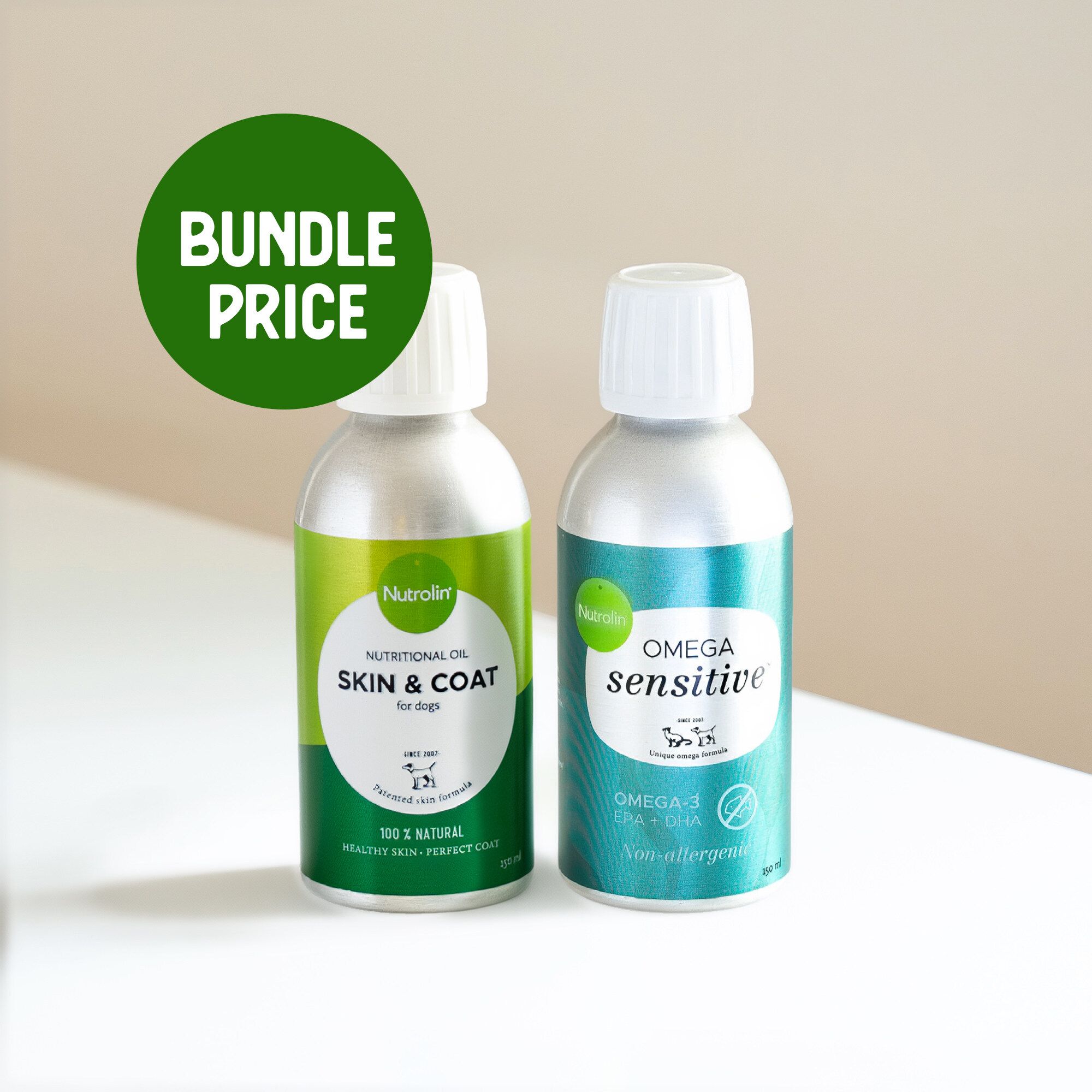
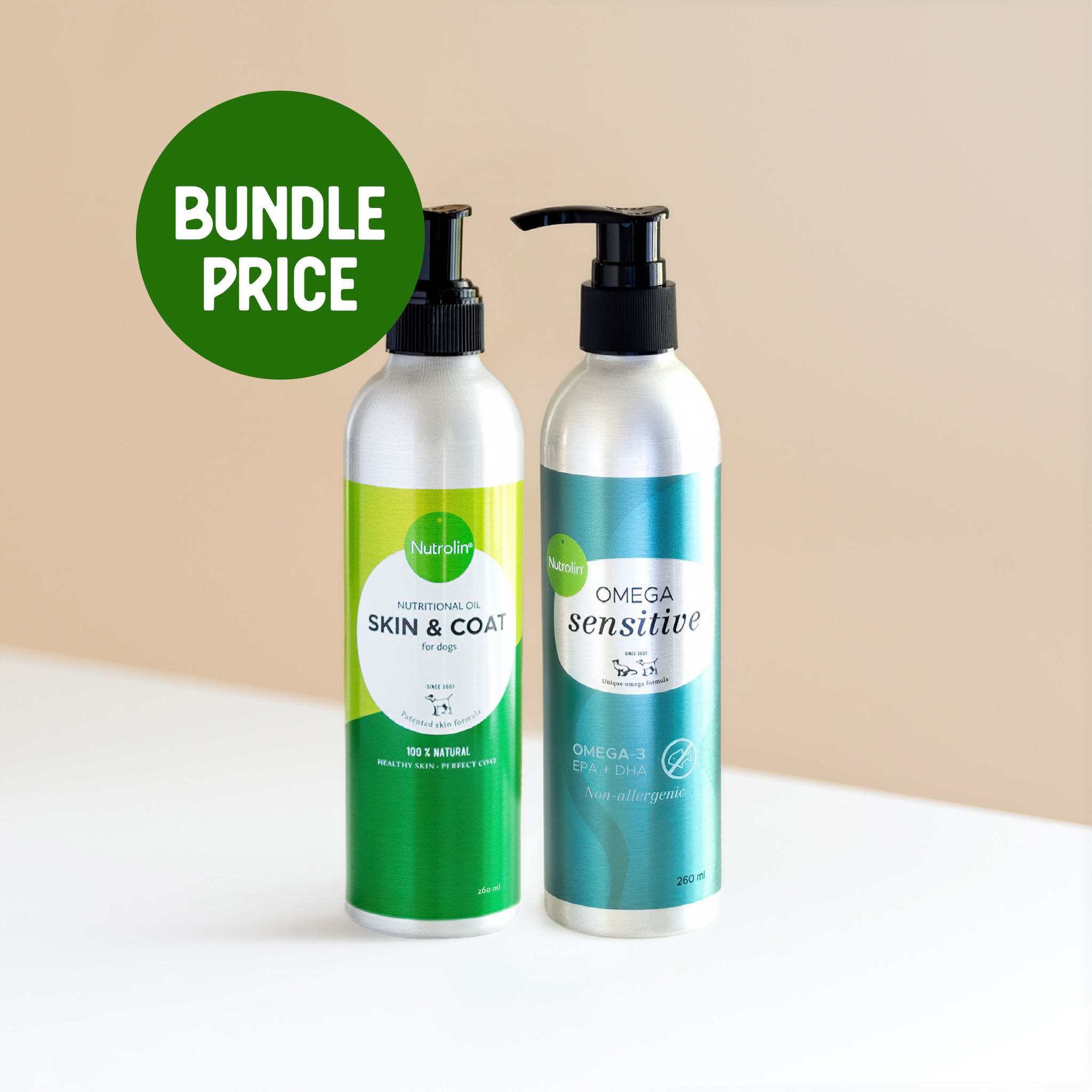
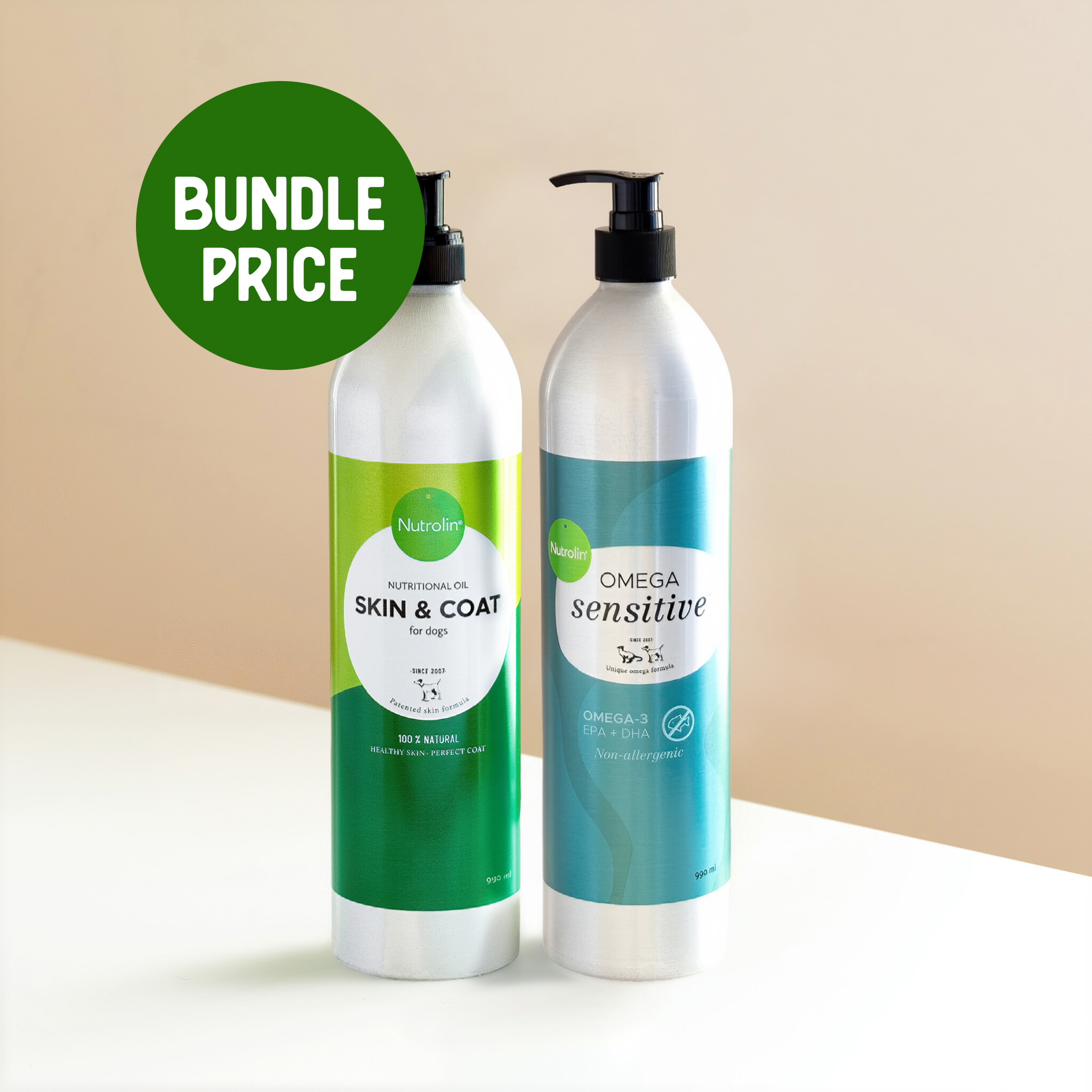
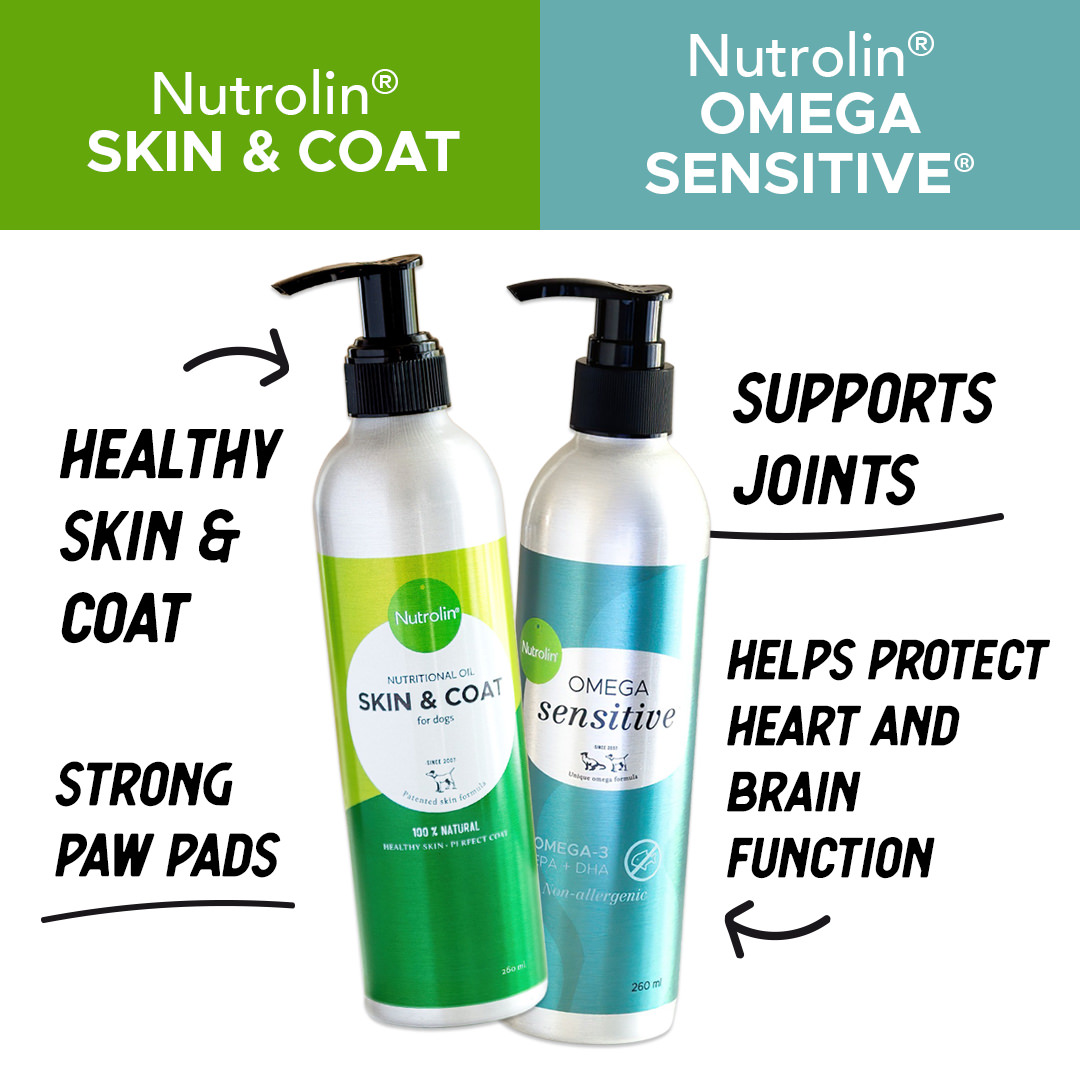
Nutrolin® SKIN & COAT + Nutrolin® OMEGA SENSITIVE®
Nutrolin® SKIN & COAT keeps skin, coat, and paw pads in top condition, while its perfect companion, Nutrolin® OMEGA SENSITIVE®, supports your dog’s everyday wellbeing with targeted support for joints, heart, and brain function.

High-quality ingredients

High levels of active ingredients
Developed and manufactured in Finland

Strong scientific background
References:
Calder, P.C. (2017). Omega-3 fatty acids and inflammatory processes: from molecules to man. Biochem. Soc. Trans. 45(5):1105-1115
Greiner, R.S., Moriguchi, T., Slotnick, B.M., Hutton, A. & Salem, N. (2001). Olfactory discrimination deficits in n-3 fatty acid-deficient rats. Physiol. Behav. 72(3):379–385.
Kelley, R.L. (2000). Canine Reproduction: What should we expect? Recent Advances in Canine and Feline Nutrition, Volume II. Orange Frazer Press; 225–242.
Serhan, C.N., & Levy, B.D. (2018). Resolvins in inflammation: emergence of the pro-resolving superfamily of mediators. J. Clin. Invest. 128(7): 2657–2669.
Zheng, Y., Yin, H., Boeglin, W.E., Elias, P.M., Crumrine, D., Beier, D.R. & Brash, A.R. (2011). Lipoxygenases mediate the effect of essential fatty acid in skin barrier formation: a proposed role in releasing omega-hydroxyceramide for construction of the corneocyte lipid envelope. J. Biol. Chem. 286(27):24046–24056.
Zicker, S.C., Jewell, D.E., Yamka, R.M. & Milgram, N.W. (2012). Evaluation of cognitive learning, memory, psychomotor, immunologic, and retinal functions in healthy puppies fed foods fortified with docosahexaenoic acid-rich fish oil from 8 to 52 weeks of age. J. Am. Vet. Med. Assoc. 241(5):583–594.